
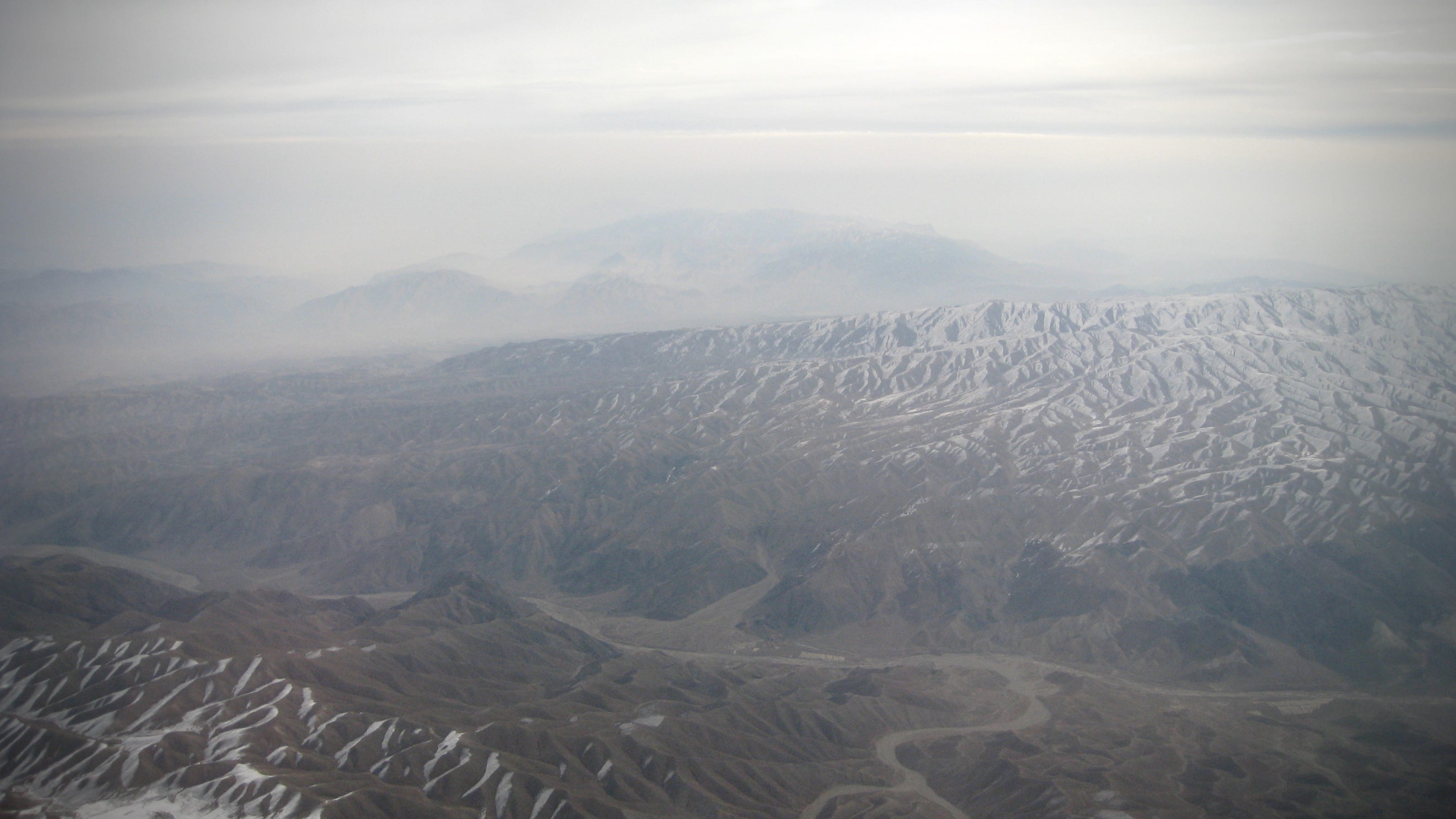
Five years after the fall of Kabul, people are marking the moment in a range of ways—mostly with melancholy or mournful reflections, lamenting the state of affairs in the country today and venting to varying degrees about what went wrong and what could have been. As I reflect on things today, I’m not sure I can do better than the piece I wrote for The Hill exactly five years ago. My analysis and feelings haven’t changed since then.
Here are some excerpts and a link to the full piece (please finish reading this before clicking out to that piece though).
Over the years, I lost more friends and acquaintances in Afghanistan than I care to count. My time in the country forever changed me, in ways good and bad. Now, my thoughts and emotions churn as I watch the fall of the country from a distance.
I am not surprised by what is happening. From my first moments in Afghanistan, I felt that America’s presence there was doomed. The effort to socially, politically and militarily re-engineer a largely illiterate, undeveloped and deeply tribal nation was an act of pure hubris. Well-intentioned as it might have been, what the United States and its partners were promising to the Afghan people was beyond what could be delivered.
And
I liken the U.S. involvement in Afghanistan to building a house by constructing an elaborate second floor and propping it up on rickety stilts stuck into mud. There was no solid foundation, no structural support, the wiring was haphazard, the plumbing didn’t work. And that second floor didn’t look like any other houses in Afghanistan; it looked like an American McMansion, decidedly out of place.
The United States and international community simply did not take into account the physical and human capital in the country when rushing to build schools, clinics, government ministries and a military. When 130,000 international troops and thousands of contractors and workers from nongovernmental organizations were there, they could keep that second floor propped up. However, the international community could never maintain that posture and it would take at least several generations before Afghanistan could build a foundation that could support the house. Of course, there was always the question whether the Afghans wanted to build such a foundation — some certainly did, but many had no desire to make radical changes to the fabric of the country.
Ultimately, that second floor was always going to fall. The question was, how hard and how fast. In the end, the United States and its partners simply dropped the house rather than let it down gently. That said, the Afghans themselves did little to help the situation.
Millions of Afghans were betrayed by an international community that promised more than it could deliver and by Afghan powerbrokers, warlords, and elite who were more interested in their own bank accounts than the future of their country and people.
I still grieve for the Afghans who had the best of intentions and bought into the sales pitch about freedom, democracy, and women’s rights.
I grieve for the people who didn’t make it back.
I grieve for the service members and others who followed orders—many believed in the mission and cause and many didn’t—and are struggling today to make sense of what they went through and why.
Today, I am still processing many things from the U.S. adventure in Afghanistan and from my time there. What is most profound to me at this point is the notion of “coming home” and how difficult that was, and, for many, continues to be.
When I returned from Afghanistan, I was not in a great headspace, although I was barely aware of it. One sign was in late December 2014 when I was in Boston and did an in-studio interview with Robin Young for the NPR show Here and Now. I had known Robin since I first joined WBUR in 2000, and I had done many pieces for Here and Now over the years from Mali, South Sudan, South Korea, Iraq, Afghanistan, and even Iceland. I always enjoyed talking with her.
Robin was what I would call a “fan of Afghanistan.” She was always interested in news and reporting from the country, and to me seemed to be rooting for the country and its people—nothing at all wrong with that. I felt she was one of many American journalists who wanted a happy outcome for the country.
For various reasons, I never fell for the country the way others like Sarah Chayes or Sebastian Junger did. They and many others often talked about the rugged beauty of the country and its people. I completely respect those views, but just didn’t feel the same way.
I appreciated the country and people, but I kept my emotional distance. I never believed that the international effort was likely to succeed, and I often had a hard time reporting on projects I thought were only going to enrich contractors while doing little to change the lives of the “average Afghan.” I didn’t want to be complicit in making projects like the various women’s sports leagues or teaching Afghan kids to juggle or skateboard seem like they were representative and changing the fabric and future of the nation.
2014 was a hard year for many of us in Afghanistan, and I was more than a little crispy when I sat down with Robin for what was one of my exit interviews after my time in the country. During the interview, I felt Robin trying to steer things into a discussion of the romance of the country and all the things I would miss after my assignment.
I wasn’t having any of it. I was angry. I was confused about what I had experienced and by being back in the United States. I felt no wistfulness. I wasn’t pining for the rugged beauty of the country and its people. I was more pissed than anything.
I was answering questions with anecdotes about how in my last weeks in the country I was selling off possessions and gear from the bureau, and one night an Afghan came and bought a bunch of items and paid me with what turned out to be counterfeit $100 bills. I later did some research on him and determined he was a notorious conman and fraudster.
That was one of my formative parting experiences with the country, and it cemented my cynicism and sense that things were not going to end well. I spent much of the next few years taking every opportunity I could to warn that people had to make some hard decisions and confront a reality where the Taliban was likely to ride it all out.
I give Robin credit for trying to pull something hopeful or inspirational out of me in that interview. But I was anchored in my feelings at the time. I was rather broken by everything I experienced—the deaths of friends, the constant reporting on innocent Afghans being killed, the also constant reporting on not-at-all-innocent Afghans killing each other and scamming the international community.
I didn’t realize it until years later, but that interview was also an early indicator of the struggles I would have with coming home. I wasn’t the same person I was before the assignment. I didn’t realize how much I had changed in the years I covered Afghanistan and other conflicts. And I had no sense of how difficult it was to leave that world, the tribal connections, and the sense of purpose, and return to “normalcy.”
In the years after, I flailed. Like a lot of veterans, I didn’t really know how to deal with the smallness of life out of theater. I gambled. I made bad bets on relationships. I figured some things out. I made more mistakes. But I kept trying.
That’s the important thing. That is the subject of my new memoir that just dropped yesterday. It’s available as an e-book from all the usual suspects, and there are links on my newly refreshed website. Thanks to John Haas for the help with the redesign.
Regarding Afghanistan, I don’t know what more I can say today. It’s tremendously sad and heartbreaking to see the state of things there. People are rightfully angry and demanding action to help the women there. Unfortunately, short of another full-scale invasion and war to oust the Taliban—again—I’m not sure what can be done.
I wish I had answers, but I don’t. That’s why I haven’t written much about Afghanistan in recent years. I really don’t have any viable prescriptions. Frankly, I haven’t seen anything in recent years that anyone has written that I felt was plausible or would make much of a difference.
It basically comes down to standing on principle and freezing out the Taliban, which means essentially letting the people continue to suffer, or coming to an accommodation with the Taliban that puts no demands on them to reform in exchange for access to deliver humanitarian support to the people.
Like in that interview with Robin all those years ago, I wish I had something hopeful and uplifting to say, but I don’t. For too long, the Afghan people and the international community were given false hope about the future of the country. I won’t add to that.
But for the sake of saying something positive, at least NPR was able to get the Afghans who worked for the bureau over the years out of the country and settled elsewhere. It took a while, but they are safe. I’m happy about that today.