
There is a moment in late spring in D.C. when there’s a sudden release of volatile organic compounds. It’s not the offgassing of a chemical plant or industrial process.
Instead, it’s one of the purest forms of biology: anthesis. Specifically, it’s the blooming of jasmine plants, releasing a symphony of aldehydes, esters, and alcohols that is one of the most distinctive and delightful floral cocktails to intoxicate the olfactory cells.
It catches me by surprise every year. There is that one day when walking to work or strolling the neighborhood when you inhale that first whiff and you pause to soak it in. It’s such a respite and relief from the fetid funk of pot smoke that has overwhelmed the city in recent years, hovering over a portion of almost every city block.
Aroma, with the transportive powers it has, can take people across continents and through time. We all know moments when a stale or musty smell takes us to our childhoods playing in our grandparents’ basement, or a mossy, slightly fermented wood scent brings us inside of a summer house by the ocean.
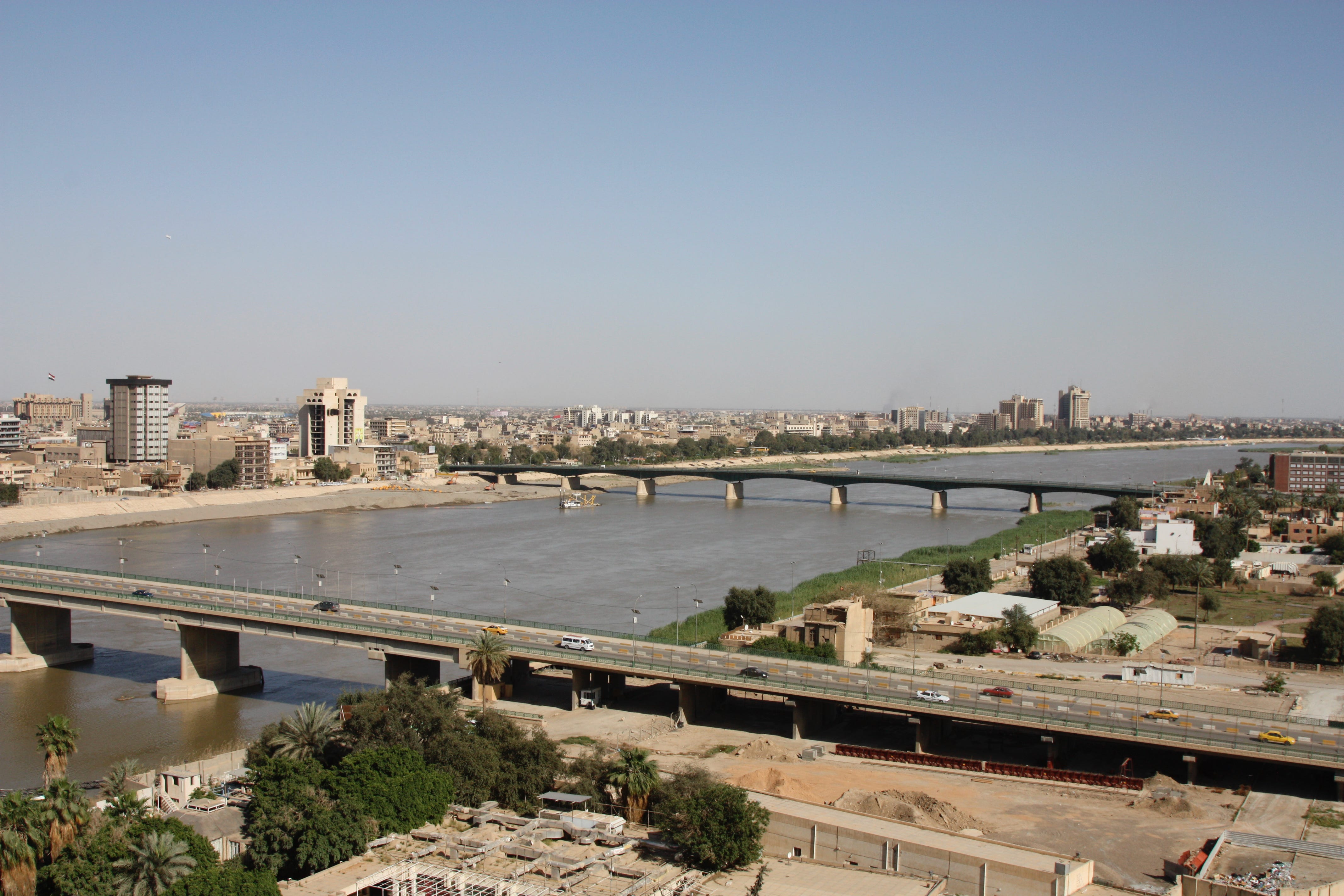
The instant a jasmine molecule hits my nose, I am in Baghdad. Specifically, the rear grounds of the Mansour Hotel on the west bank of the Tigris River.
It’s April 2010, and I am camped out at the hotel while on a reporting trip.
At that point in my trip, I had just completed a week-long embed at Forward Operating Base Warrior in Kirkuk. I was reporting a story on the ongoing dispute over control of the city and efforts to find a deal the Iraqi Kurds, Arabs, and Turkmen could live with.
Of the handful of embeds I had done in Iraq and Afghanistan to that point, the Kirkuk one was my favorite. Unlike other embeds when I was chasing the “bang bang” and hoping to see combat action, the Kirkuk embed was a means to get access to the city and surrounding communities on the cheap—without having to pay for a hotel, driver, fixer, or any other logistics since I was working for a low-budget radio program at the time.
The Kirkuk embed paid off in that regard. I traveled around Kurdistan with U.S. troops visiting neighborhoods and people from the different ethnic groups. I came out with a rich story about the difficulty of resolving the status of Kirkuk: who controlled it politically and economically and why Baghdad and Kurdistan were still struggling to finalize the relationship.
From Kirkuk, I flew to Baghdad to spend a week free-range reporting about the recent elections. Had it been up to me, I would have stayed at the Hamra hotel, where I stayed during my Iraq reporting trip the year before.
The Hamra was long a mainstay for journalists and other internationals ranging from diplomats to mercenaries. In the early days of the George W. Bush war, the place was the Star Wars cantina—a motley assortment of people with questionable intentions drinking away.
The Hamra was basic in terms of accommodations. My “suite” in 2009 was spacious and looked authentically 1974. It had two twin beds/couches, a dining room table, refrigerator, and kitchenette with hot plates. None of the furniture matched. It all seemed to be whatever the owners could get their hands on.
On the wall was an odd painting of what looked like a few dozen 18th century ships congregating around some European port city. It was about as non-Iraqi of a piece of art as you could get.
Otherwise, it had a basic restaurant and sold 16-ounce cans of Carlsberg, so it met the needs. The hotel served as everything from a long-term bureau for some outlets to a transient crash pad for parachuters like me.
Unfortunately, when I traveled to Baghdad in 2010, the Hamra was closed. On January 25, 2010, coordinated car bombs detonated outside Baghdad’s Ishtar Sheraton, Babylon, and Hamra hotels. The blast at the Hamra killed 16 people and severely damaged the hotel and Washington Post bureau next door.
I visited the hotel to see the damage, and it was severe. Neighboring houses took the brunt of the blast as the car didn’t make it inside the blast walls surrounding the hotel. Still, the explosion took out windows, scarred the hotel walls, and the car’s engine landed near the hotel entrance.
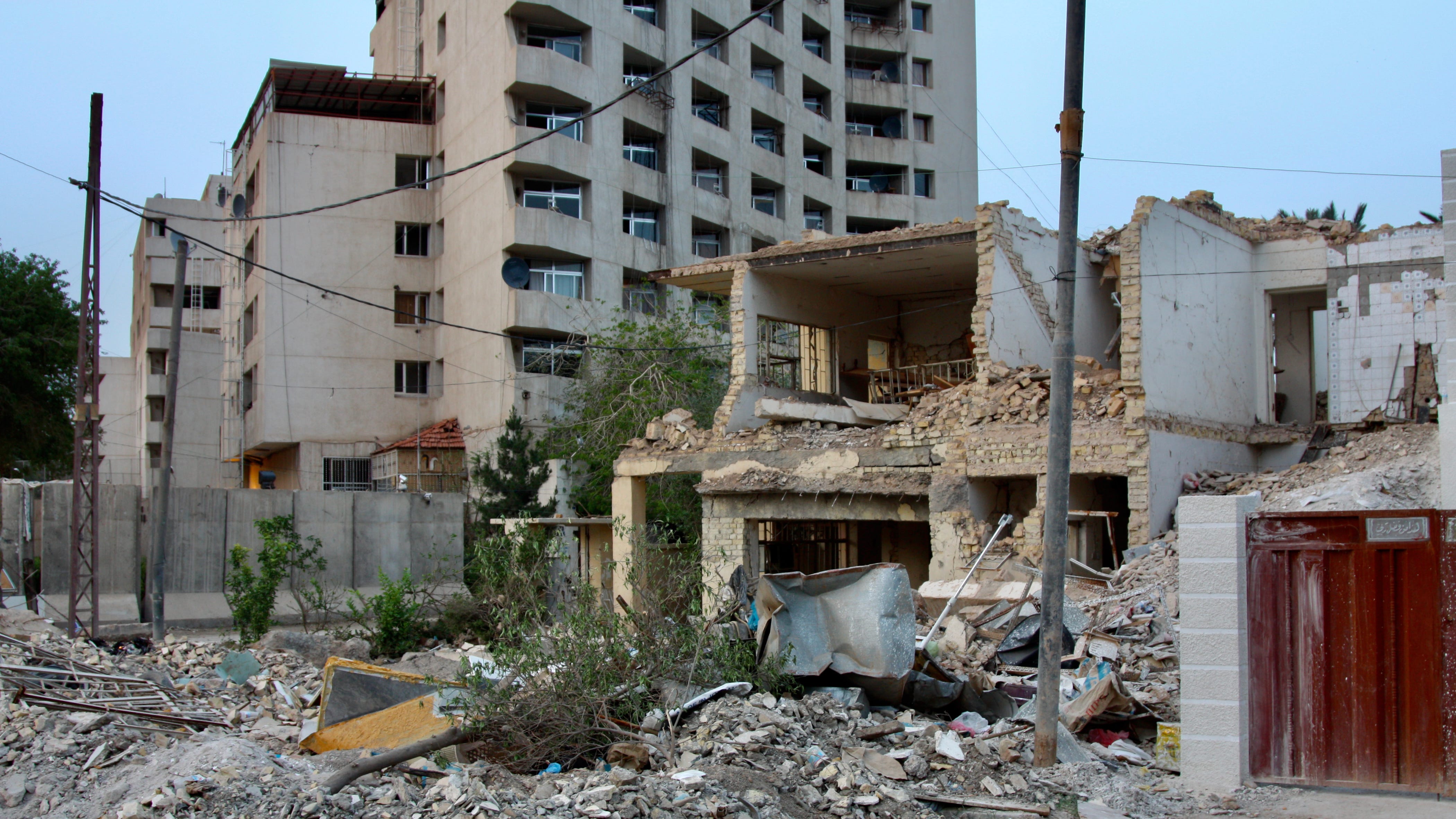
That’s why I was staying at the Mansour Hotel, located in the Karkh district on the west bank of the Tigris, not far from the Green Zone and many government buildings. The hotel had been constructed by the Melia chain was once a high-end affair.
My ninth-floor room overlooked the Sinak Bridge and the river. From my balcony I could also see the sprawling U.S. embassy complex a little more than a mile away. It was a great view, far better than anything at the Hamra. For the most part, the room was also much nicer. It was more elegant and ornate, although well past its prime. The ceiling was a stained mess around the AC vent and the doorframe had a nasty crack that had been haphazardly nailed back together. The door had been kicked open at some point, for reasons I really did not want to know.
Between the hotel and the river was the large back yard of the hotel with a giant three-ring swimming pool that was empty and covered in dust. There were tennis courts, a Chinese restaurant, and a fair amount of garden space among the trees.
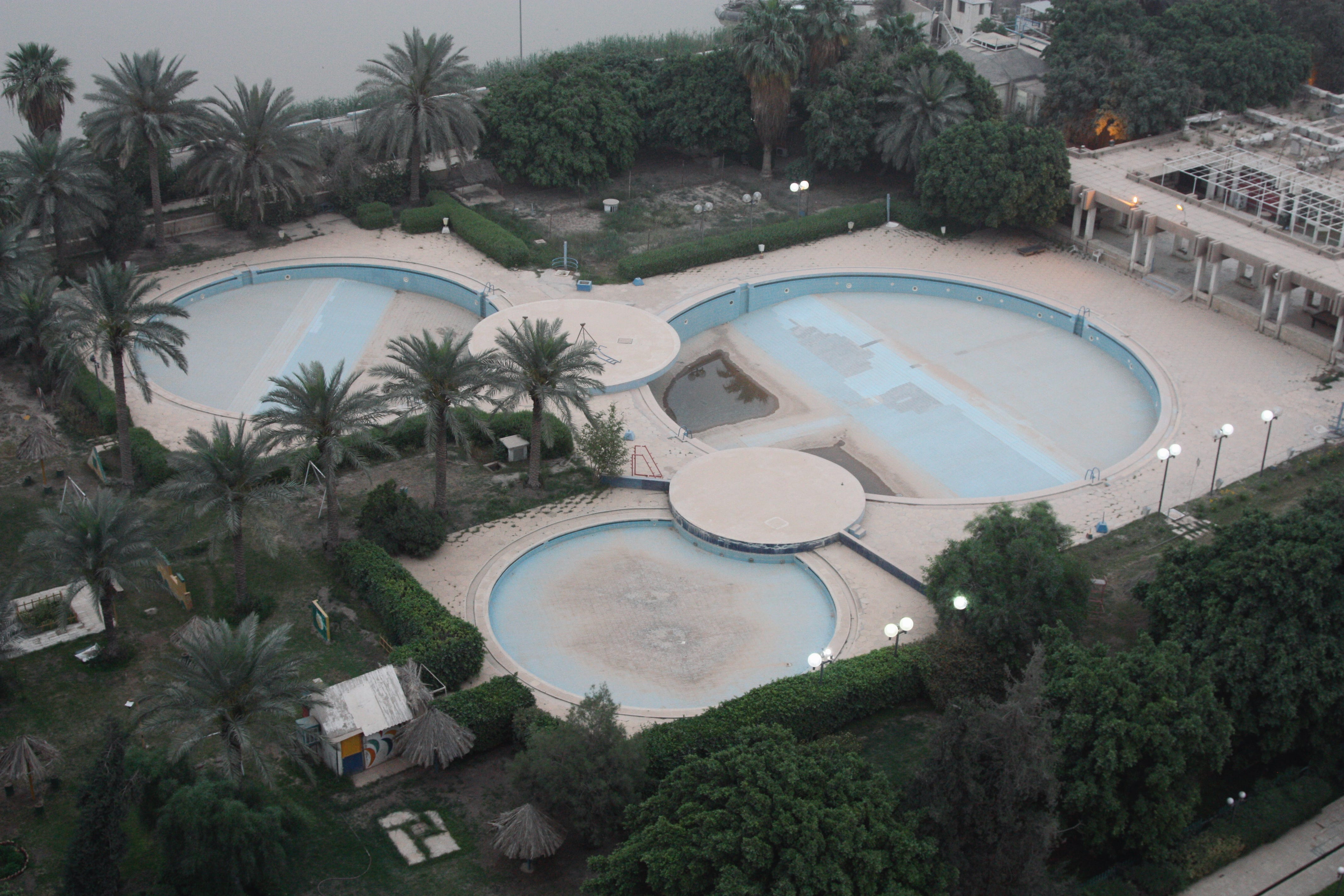
The Mansour grounds were a ghost town. There was no ambiance to speak of and no reason to sit out there. It was just dust.
It was hard to tell how long the pool and grounds had been left untended. By eye, the accumulation of dust and sand made it look like it had been years since anyone had been lounging by the pools. However, given the intensity of sandstorms in Iraq, it seemed plausible that one storm could have coated the grounds. Regardless, it all had the feel of a set from Blade Runner 2049 or some other apocalyptic film.
The upside of it was it was a reasonably secure and contained area. The only people with access were hotel guests and restaurant patrons who had to enter through the various checkpoints and screenings to enter the hotel.
Given the recent spate of bombings in the city, security was set on maximum while I was there. Thus, I had no reservations about using the rear grounds as my jogging “track” while I was there.
In the evenings, after days spent crisscrossing the city with my driver and fixer interviewing government officials, political candidates, and Iraqis from street vendors to elites at the city’s social clubs, I would go running.
I would descend the steps from the hotel to the rear grounds, pop on my jogging mix, which was an hour of The Who songs, and to the opening chords of The Seeker, I’d start jogging the largely abandoned grounds.
I started my route by heading to the right, passing the empty pools looking like a tableau from a Hollywood film about societal collapse. I’d run along the patio of the giant cabana and locker rooms and then reach the back fence of the property that paralleled the river.
I’d turn around at the open door of the Chinese restaurant kitchen, run back along the path, pass the cabana and the pools, and keep going to the other side of the back grounds. That would take me into a dark corner of the grounds where a grove of trees concealed the twin tennis courts. I would circle the halogen-lit courts several times, and then head back out to complete another circuit.
I had no idea how far I ran each session. It didn’t really matter. It was 45-minutes of running outside in Baghdad, which was only possible to do—safely—at a compound like the Mansour hotel or the Victory Base complex—or the nascent U.S. embassy grounds.
While The Who provided the aural stimulation during my runs, the jasmine flowers throughout the hotel grounds provided the olfactory stimulation. With the exception of the turnaround by the restaurant kitchen, where the aromas of General Tso and beef and broccoli briefly overwhelmed the sweet flowers, it was the jasmine that filled me and masked the dust, smog, and other unhealthy particulates I was hoovering in as I ran around the grounds.
I tried not to think about that part of it. Whatever all the silt and dust was covering the pools—and everything else in the city—it was clearly hovering in the air at all times and thus getting sucked into my lungs as I huffed along.
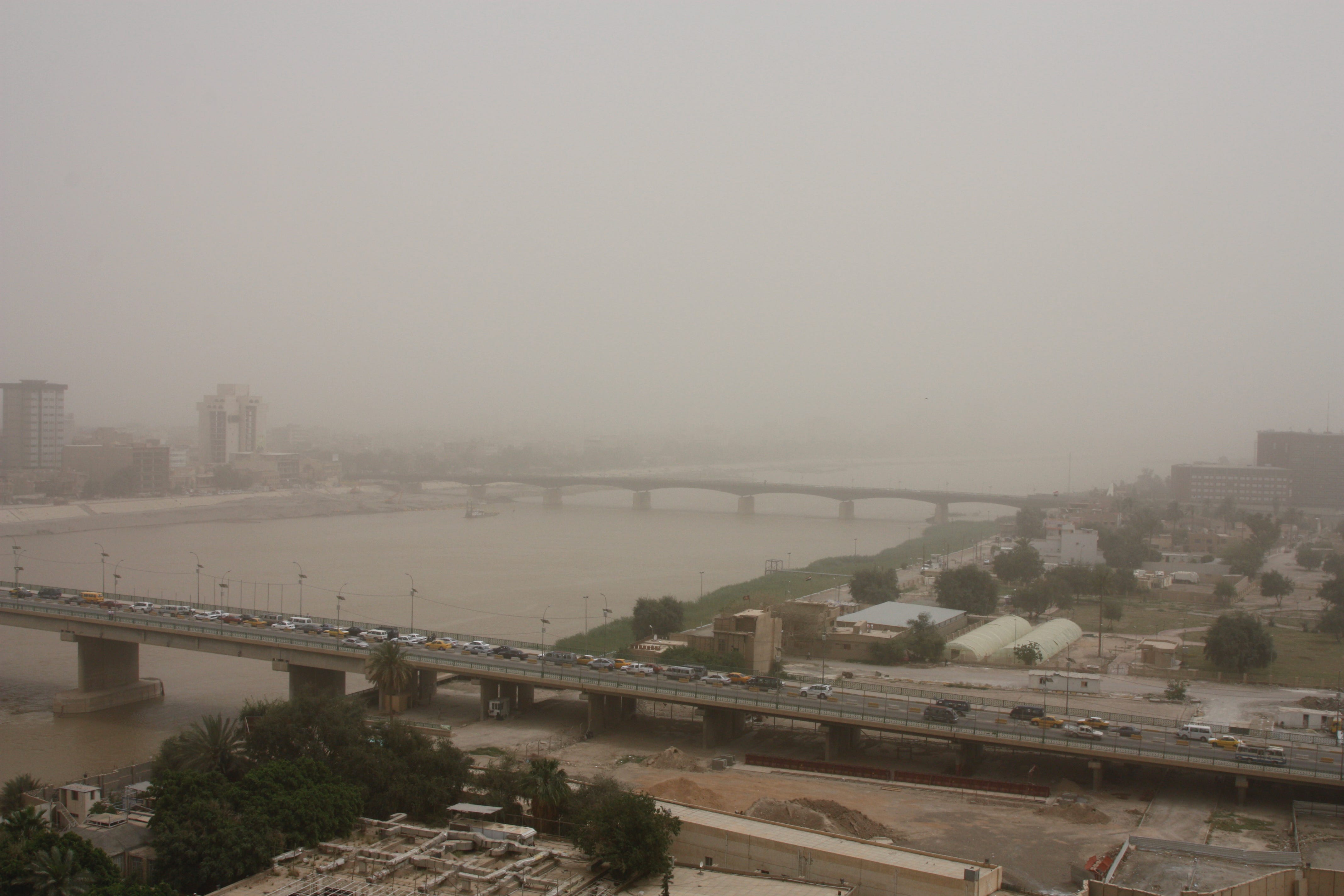
After a running session, I’d return to my swank, Saddam-chic suite, shower off the sweat, sand, and Chinese food grease, crack open a can of Carlsberg, and sit out on my balcony reviewing the day’s haul of interviews and photos.
While I had encountered jasmine countless times in my life prior to that week, it was always in some fleeting manner such that the scent didn’t become a scene. It was never indelibly embedded into an experience the way it was during that week in Baghdad.
And Baghdad was a vivid place. I haven’t been back since early 2012, but every time I was there, it was an overpowering sensory experience. It was a noisy city in every respect. Visually it was an onslaught of sand-colored buildings, sand and dirt piles throughout the streets, the chaos of electrical wires strung between buildings and running along overwhelmed utility poles. Sonically, it was car horns, trucks, helicopters, street vendors, and the periodic rumbles of explosions. The smells ranged from the succulent spread of street foods—rotisserie chicken, grilled meats, and fire-roasted fish known as masgoof, my favorite local dish—to the dry mélange of sand and toxic particulates to the stench of garbage—either fermenting in the streets or burning in pits and piles—to the nourishing clouds of jasmine blooms.
That week in April forever bound the smell of jasmine to Baghdad in the pathways of my brain. “The Seeker” blaring in my ears, the silt-pale hotel grounds, and the lush scent of Jasmine: my wartime oasis.
I’ve been relatively quiet since leaving my last journalism position, but I hope to be making some noise soon. I have an ebook in the works—there will eventually be an audio version, and perhaps limited print copies. It will land sometime this summer. Details to come soon. I’ll just tease with this: I’ll bet you’ll not be able to walk away once you start reading it.